Let's Talk

Make Good Choices!!


I have been told that the term Choose Wisely! is confusing. What do you mean by that? Great question and EXACTLY what we want our audience to be asking. “What does it mean to choose wisely?” That’s the basis of the discussion we’d like to initiate.

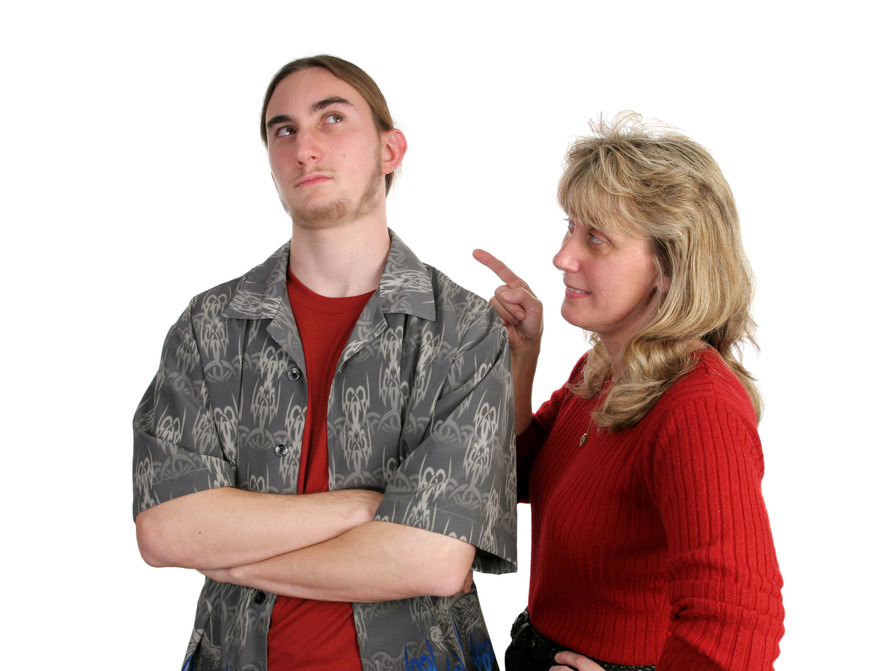
Let me start by saying that when you were leaving the house as a teen and your mom called after you “Make good choices!” no one had to explain what she meant. Now that I have teenagers of my own and use that same line, it still doesn’t require an explanation.It is a universal warning, which we all intuitively understand. Don’t do anything stupid!! And the choices referred to were clear: drinking, getting in the car with someone who has been drinking, sex, smoking, drugs. One of our responsibilities as parents is to prepare our children to make difficult, unpopular choices. To point out that there is always a choice in every situation and to encourage them to consider the consequences of their choices before they make them.

When creating the logo, we specifically chose grey for choose and white for wisely because the grey areas in life are where the difficult choices reside. The black and white decisions don’t require much thought – discipline and self control, yes. It doesn’t take a genius to know that getting in the car with someone you know has been drinking is NOT a wise choice. Having unprotected sex is NOT a wise choice. Kids have been lectured on those kinds of choices repeatedly.

The more challenging questions arise in those grey areas, which seem to be multiplying daily. Often it is not a decision between a good choice and a bad one – just the best available one. Our Choose Wisely! project is merely an effort to provide a venue to discuss some of these choices in an effort to promote a dialogue regarding how others handle those grey areas. If we as adults struggle with the grey areas, you can imagine how confusing it must be for the upcoming generation.

The reader will have to consider for themselves what wisdom or inspiration, if any, each story provides. What speaks to one person may hold no meaning for another. The story you might think is the worst may be the one to offer clarity to someone else.

Tony Jarvis, author of With Love and Prayers, commented at a recent presentation entitled The Deepest Needs of Teens that, “Parents and other adults working with teenagers have an obligation to share the insights and answers they have discovered on their own pilgrimage.” He went on to say that our silence is a betrayal. “Sharing our mistakes and struggles is the most valuable gift we can offer to the next generation.” During his long career with children, he said, “You would be amazed how many times teenagers quote the stories their parents told them. They remember! Teenagers want to see us as people with convictions, to know what we really care about, what we value, what we live by. They want to know what we stand for.” I will share one more thought from that presentation. Tony quoted something a teenager said to him: “Don’t you adults know anything? Tell us what you think. We’re capable of sorting out what we hear.”

That is what the Choose Wisely! effort is all about. Presenting a gift of stories sharing our thoughts, beliefs, values, mistakes, struggles, victories and whatever wisdom we’ve gained through life. It all starts with our choice to share a story. That story then takes on a life of its own affecting others in ways you will never know. 

jb

The Conversation Begins Here...

by Joanie Butman

Why the emphasis on starting a conversation? Because it is a lost art. We have become a global community where extended families don’t necessarily live in close proximity. Most are scattered across the country, if not across the globe. Somewhere in that distance we have lost the value of their wisdom and guidance that was once incorporated into our daily lives. The elderly are not on Facebook or Twitter so they are invisible to the upcoming generation who rely heavily on technology as their main mode of communication. We are hoping our campaign will bridge that communication gap and bring the elder generations’ stories to life for everyone regardless of age. I urge you to make the effort to seek out an elderly parent, grandparent or mentor to solicit their story and submit it for them as many face health challenges that prevent them from writing their own. They need someone to be their eyes and hands as well as their IT person. You might be surprised as I was when I interviewed my mother. In writing her story, I discovered a missing piece of my own.

While technology now allows us to connect with people around the world, sometimes it comes at the cost of connecting to the ones around the corner or even across the table. The technology age leaves many aching for a human connection. By telling our stories, it opens the door for compassion and a personal connection that couldn’t exist otherwise. For example, a newly widowed woman will find more comfort talking with another widow than with a woman who still falls asleep and wakes up every day with her partner by her side. Someone with cancer will seek comfort from others who have traveled the same road because those are the ones that understand their pain, fears and challenges. A happily married person will never be able to relate to the pain of someone going through a divorce. This common bond is the basis of every support group in existence. We are hoping the Choose Wisely! book will become a source of comfort and support regardless of what challenge you are currently facing. By collecting so many different stories, we hope to address the problems most of us face every day. My guess is that in the course of a lifetime, we all face the same litany of choices and challenges.

And who hasn’t experienced a moment of joy when your first reaction is to share it with someone? It is an innate human instinct to share our joys and sorrows. In the same way that sharing burdens ease the load, sharing joys and victories increase the pleasure. It’s the concept behind the tradition of celebrations. Somehow, whatever the accomplishment or occasion, sharing your happiness with others brings joy to them as well. It can also inspire others to action when they see someone overcoming the odds to accomplish something most deemed impossible. “If they can do it, I can do it.”

Beginning with Eve...

by Joanie Butman

Beginning with Eve, history is merely a record of individual choices and their ripple effect. By studying past decisions, we gain a perspective that better prepares us to make our own. History is littered with monumental decisions, but also the simplest of ones that led to individual, national and global transformation.

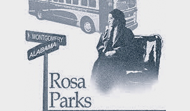
Rosa Park’s decision not to give up her seat on the bus is one that comes to mind. One quiet lady gained the nation’s attention sparking the birth of the civil rights movement. I don’t think she was trying to change the world. Maybe she was just too tired. It doesn’t really matter. That small decision affected our world in ways she never imagined.  When interviewed she commented, "All I was doing was trying to get home from work."

Even though we all have the capacity, most of us will not have the opportunity to be a Rosa Parks, or maybe we will. Either way, we all have a story to tell. As my friend, Jack, commented in his interview, “If you don’t have a story, you haven’t had a life.” 

What’s yours? We’d like to know...

Table Talk...Introduction

by Joanie Butman

My vision for this blog is to share thoughts and stories as a way to encourage you to do the same. Discussing the subject of choices and wisdom doesn’t mean I’ve figured out the answers; it means I admit I’m not even sure of the questions. However, if we’re talking about them, maybe we'll discover some in the process. Let’s face it, we’re all stumbling through life – hopefully learning, growing, and searching for meaning in a world offering a seemingly endless array of options.

Blogging reminds me of the concept of my book, Table Talk, which was inspired by the countless conversations I’ve shared at my kitchen table. I have spent many an hour there with friends and relatives drinking coffee and discussing everything from cabbages to kings. Some of my fondest memories have been made at that table. In fact, just the other day our new mailman knocked on my door to introduce himself, and we ending up sitting at my table while he told me the story of how he met his wife and all about his daughter’s recent wedding.

My table is well-loved, meaning it is scarred and stained from overuse, glued back together in places and sags a bit in the middle (not unlike its owner). I often wonder if it’s from the burden of all the life it’s seen: fun, laughter, tears, pain, sorrow, comfort, joy, arguments, reconciliations, debates, celebrations, consolations, games, homework and, of course, writing. Oh, and sometimes we even eat at it.

Not only does it sag under the weight of all the life it has seen, the floor underneath is worn out by the constant movement of chairs indicating the traffic pattern around our table. That’s why I love antiques so much. They wear their use as a sign of a life well-lived and well-loved. Too bad our society can’t adopt that same attitude towards people. Some cultures do; but sadly, in the U.S., we are more often trying too hard to hide our battle scars when we should be displaying them proudly along with sharing the wisdom they helped us achieve.

 Well, I can’t say, “Pull up a chair,” and I can’t offer you coffee, but I can invite you to come and sit at the kitchen table of my heart and visit for a while.

I will leave you with the following thought. Jimmy Valvano, noted basketball coach and public speaker (Jimmy V Foundation for Cancer Research), once said his “personal secret to living a full life was to make sure to find something every day that will make you laugh, cry, and think.”

This is what I hope to offer.                                                  Joanie